Situated in the heart of the Succulent Karoo, Namaqua National Park has grown enormously and stretches from the well-known Skilpad section, near Kamieskroon, on the escarpment westwards to the coast. The recently added GroenSpoeg coastal section is the only significant remaining untouched section of the Namaqualand coast.
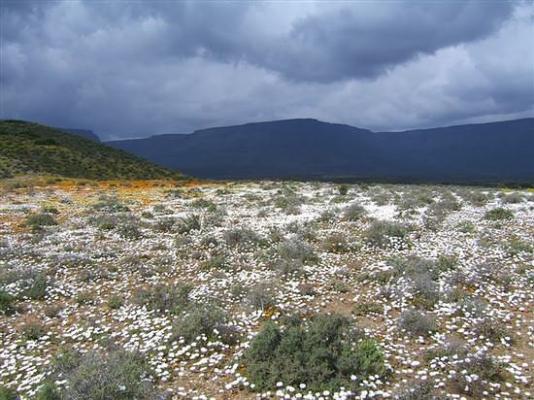
The gradient from the escarpment to the coast is important from an upland-lowland and rainfall perspective and contributes to the richness of species within the Park. With its winter rainfall, Namaqualand is home to the richest bulb flora of any arid region in the world and more than 1 000 of its estimated 3 500 plant species are found nowhere else on earth.
Amphibians and reptiles are also well represented, with a number of endemic species. The mammals that have adapted to these harsh conditions include gemsbok,
unique succulent and flower species national Park springbok, red hartebeest, klipspringer, aardvark, baboon, steenbok, duiker, porcupine, black-backed
jackal and leopard. Birds are typical of the dry arid western regions of the country.
The Namaqua National Park lies 21km west of Kamieskroon, which is 67km south of Springbok. Turn off the N7 at the Kamieskroon sign, continue to the
T-junction and turn left following the brown information board with the SANParks logo on it. You will go onto a gravel road. Pass the Kamieskroon Hotel and, travelling westerly, you go under a concrete bridge. Keep on with this road until you reach the Park. Although the road can be a little rough, it can be travelled on with an ordinary two-wheel drive vehicle.
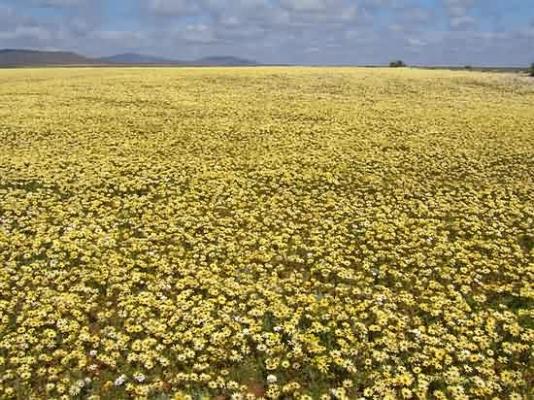
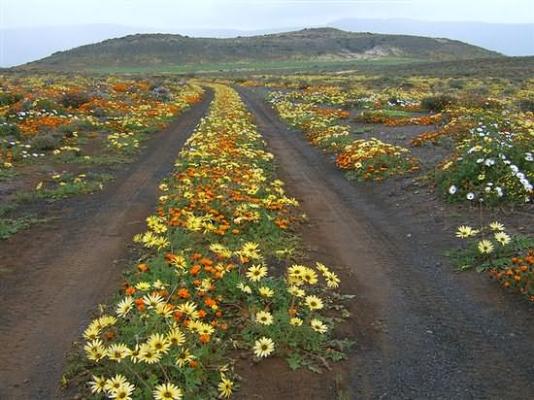
The Park is still in a development phase but has a lot to offer its visitors. The best known, and at this stage most popular part of the Park, is the 5km Skilpad circular route especially in the springtime flower season. Besides the famous spring flowers, the Park is home to 134 different vegetation types, many small fauna species, amazing bird life and a fascinating collection of reptiles.
A great way to explore Skilpad is by mountain bike, Visitors should bring their own mountain bikes. There are two 2-hour walking trail s, a picnic area with
ablutions and a shop and kiosk at Skilpad. The rest of the Park is accessible to 4x4 vehicles through 220km of roads that includes roads to an unspoilt coastline and a 25km route, with lovely vistas, to Soebatsfontein.
Skilpad:
Number of chalets: 4
Maximum people per chalet: 3 adults or 2 adults and 2 children
Power source: Electricity, 240v, 15amp, 24 hours
Other facilities: The neighbouring farms tea room provides light snacks
Activities: 2 hour walking trails, mountain biking, 4x4 trail
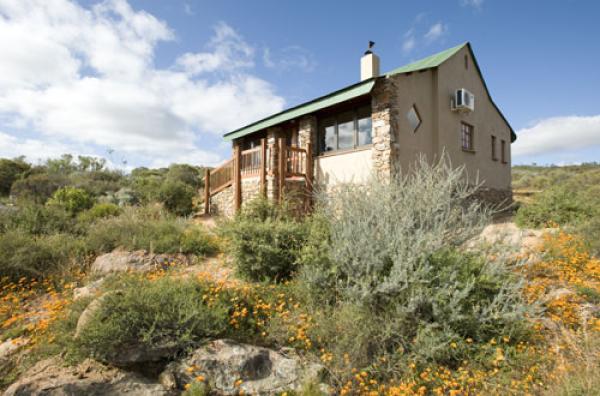
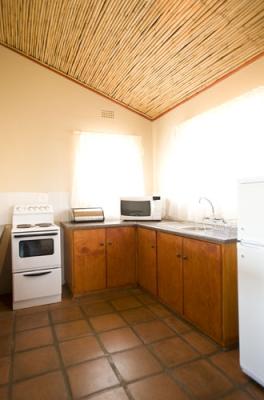
All four chalets are perched on an escarpment and have uninterrupted views to the far away coastline. They have a separate bedroom, lounge, open plan kitchen, enclosed veranda with dining area as well as indoor and outside braai places. They are fully equipped for self-catering and one unit has been adapted for use by guests with challenged mobility.
Luiperdskloof:
Maximum people Can accommodate: 6 people in two bedrooms
Power source: Gas heating and stove, paraffin lighting
Activities: On the Caracal 4x4 route
Lies in a secluded valley in the Kamiesberg section of the Park, underneath a pair of imposing granite domes. The area is dotted with fountains, some with shady glades - perfect for picnics or just some quiet time. It can only be reached by 4x4.
Namaqua Coastal:
Facilities: 8 Camping areas (31 camp sites) along the coastline, with braai areas and Enviroloos.
The pristine coastline from Groen River mouth to the Spoeg River mouth is a recent valuable addition to Namaqua Park and is still in a development stage.
Carpets of flower (in season)
Quiver trees
Klipspringer
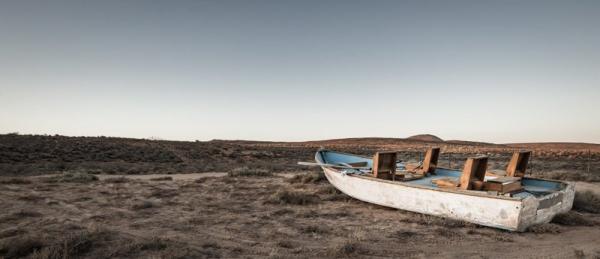
Unspoilt coastline
Quartz Patches
1. Accommodation rates do not include Conservation Fees which are payable at the entrance gates.
2. Please ensure that you are familiar with the Rules & Regulations of National Parks before making a booking.
Pets are not allowed in a National Park.
Vehicle fuel and ATM facilities are available in the nearby town Springbok (87km away)- not in the park itself.
It is an offence to pick flowers or to remove plants or any other material from the park.
There are limited toilet facilities in the park.
Vehicle repairs, post office and police services are available at Kamieskroon. Medical services only in Springbok, which is 67 km away.
Adventure and Outdoor:
* Caracal Ecotrail (4x4 only)
* Circular drive with viewpoints during the spring flowering season.
* Several short nature trails.
* Picnic sites.
* A seasonal visitor information centre.
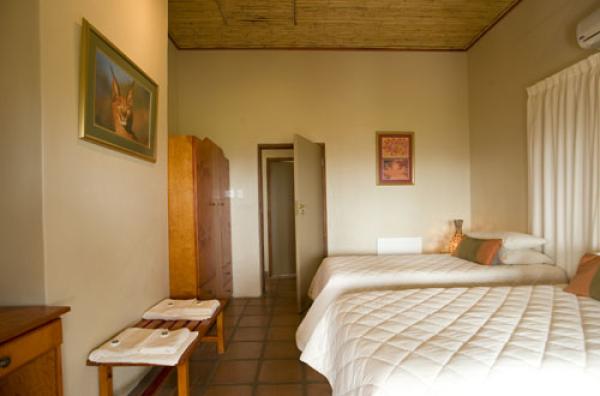
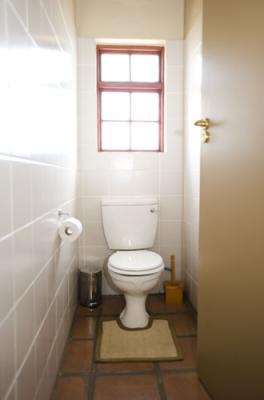
Chalet (CH2/4): 1 bedroom with 2 single beds, 220V Electricity, 3/4 sleeper couch suitable for 1 adult / 2 Children, Air-conditioned bedroom, Ceiling Fan, Contact Park (027-672-1948) with special requests, Enclosed veranda with dining area, Indoor fireplace, braai area outside, Limited road network for sedan vehicles, No shop, restaurant or filling station in Park, No smoking, Open plan lounge / kitchen area, PROVIDE OWN FIREWOOD!, WC and shower.
Chalet (CH2/4Z): 1 bedroom with 2 single beds, 220V Electricity, 3/4 sleeper couch suitable for 1adult / 2 Children, Air-conditioned bedroom, Ceiling Fan, Contact Park (027-672-1948) with special requests, Enclosed veranda with dining area, Indoor fireplace, braai area outside, Limited road network for sedan vehicles, No shop, restaurant or filling station in Park, No smoking, Open plan lounge / kitchen area, PROVIDE OWN FIREWOOD!, Unit accessible to the mobility challenged, WC and shower
- No cancellation fee will be incurred for cancellations made after payment of first deposit up to and including 46 days prior to arrival.
- Cancellation fees equal to 50% of the total reservation cost is payable in a case of cancellation made between 45 days and 30 days prior to arrival.
- Cancellation fee equal to 100% of the total reservation cost is payable in a case of a cancellation made between 29 days prior to and date of arrival
- 100% of the total cost for any non-arrival/no-shows
Reservation made within 45 days prior to arrival is payable within 24 hours from the day reservation is made.
- Conservation levy is always excluded from the booking amount and needs to be settled on arrival.
It is your responsibility to check if the reservation is correct. Should the reservation be incorrect, please contact our office immediately.
If the arrival date of the itinerary is postponed prior to or on date of arrival and then cancelled at a later stage, the fees that applied at the time of amendment will be enforced if the amount is greater than the new cancellation fees.
Cancelling or downgrading of a reservation 45 days prior to or on arrival will result in cancellation fees according to a sliding scale (based on the total reservation cost) which varies between 50% and 100%.
Should the reservation not be taken up on the arrival date the accommodation will be held until 09:00 the following day after which the reservation will be cancelled and the deposit, where applicable, forfeited.
The camp is accessible by normal sedan vehicle via Groen River gate. Please note that due to tough terrain normal sedan cannot be used further than the camp. In order to explore Namaqua National Park a 4x4 vehicle is required. To enhance the visitor experience of the park guests are advised to use 4x4 vehicles.
The topography is characterised by granite outcrops with large round or flat exposed rock separated by sandy alluvial valleys. It is situated some 495km from Cape Town off the N7 route to Namibia, and 67km from the town of Springbok in the north. The nearest town is Kamieskroon, which is some 22 km from the reserve and park offices.
Gate Hours:
08:00 to 17:00
At present the Park has only a limited road network available to sedan vehicles. No shop, restaurant or fuel is available in Namaqua National Park and guests must take along their own firewood.